
















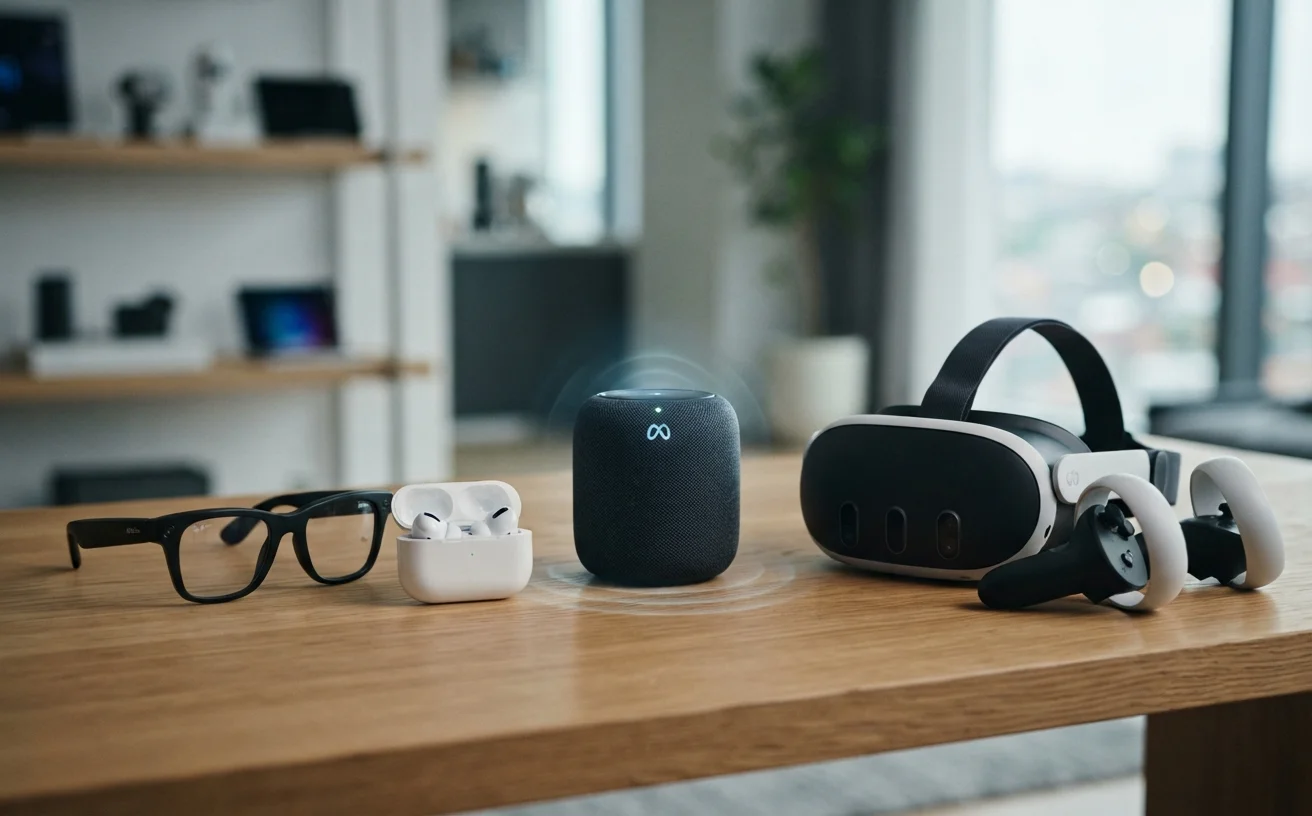
Meta is expanding its vision beyond social media, introducing a new generation of AI-powered gadgets that could change how people communicate, interact with technology, and experience digital content. From intelligent smart glasses and voice-controlled wearables to next-generation virtual reality headsets, the latest developments point toward a future where artificial intelligence becomes a natural part of everyday life.
The emerging lineup also includes potential competition from OpenAI and Apple, with AI-powered speakers and advanced AirPods reportedly in development. These devices highlight a growing shift in the technology industry: instead of relying entirely on smartphones and traditional screens, companies are exploring more personal, hands-free, and immersive ways to bring AI into consumers’ lives.
Here is a detailed look at five upcoming AI gadgets, their expected features, possible launch timelines, and how they could reshape the consumer technology market.
1. Meta’s New AI Smart Glasses: A Personal AI Assistant Right Before Your Eyes

Meta is reportedly pushing the boundaries of wearable technology with a new generation of AI-powered smart glasses designed to bring digital assistance directly into the user’s field of vision.
Unlike conventional smart glasses that primarily rely on audio interactions, the newer display-equipped concept aims to combine visual information with voice-based AI assistance. The goal is to make everyday tasks easier without requiring users to constantly reach for their smartphones.
Expected Features
-
Integrated visual display: A compact display could present notifications, navigation directions, messages, and contextual information.
-
AI-powered assistance: Users may be able to ask questions, receive suggestions, and interact with an AI assistant through voice commands.
-
Hands-free communication: The glasses could support calls, messaging, and other communication features.
-
Smart sensors and microphones: Built-in components could help the device understand voice commands and respond to the surrounding environment.
-
Wearable interaction: A companion wristband could potentially provide additional control through gestures or other input methods.
The broader vision is to make AI assistance accessible without requiring users to look down at a phone or open an application.
Meta’s approach reflects a larger industry trend in which wearable devices are evolving from simple accessories into intelligent computing platforms.
2. Smart Glasses With Voice Control: AI Without the Need for a Smartphone

Voice-controlled smart glasses are emerging as one of the most practical applications of artificial intelligence in consumer electronics. Meta’s collaboration with eyewear brands has already demonstrated how AI can be integrated into familiar everyday accessories.
The next generation of these devices is expected to focus on making AI interactions faster, more natural, and less dependent on smartphone screens.
What Makes These Glasses Different?
The glasses are designed to combine traditional eyewear with intelligent digital features, including:
-
Built-in cameras for capturing photos and videos.
-
Integrated speakers for calls, music, and AI responses.
-
Microphones that allow users to interact with voice assistants.
-
AI-powered image recognition and contextual assistance.
-
Hands-free operation for everyday activities.
One important distinction is that some smart glasses do not include a traditional display. Instead, they deliver information through audio, allowing users to remain focused on their surroundings.
According to the newspaper report, a new model could arrive around November, with an estimated price of approximately ₹38,000. This should be treated as a reported price expectation rather than a confirmed retail listing.
If these features and pricing materialize, voice-controlled glasses could become an alternative to conventional wireless earbuds and other personal assistant devices.
3. OpenAI’s AI Speaker: A Potential New Competitor to Amazon Alexa

OpenAI is reportedly exploring hardware products that could extend its AI technology beyond computers and smartphones. Among the devices discussed in the report is a smart speaker that could introduce a different approach to voice assistants.
Traditional smart speakers, such as those powered by Amazon Alexa, generally rely on predefined commands, connected services, and specific voice interactions. An AI-first speaker could offer a more conversational experience, allowing users to communicate with the device in a natural manner.
Potential Capabilities
1. Natural conversations
Instead of relying exclusively on fixed commands, the speaker could enable users to ask follow-up questions, discuss topics, and receive context-aware answers.
2. Personalized assistance
An advanced AI assistant could help users organize schedules, manage daily tasks, and access information through simple conversations.
3. Smart home integration
The device could potentially connect with compatible smart home products, allowing users to control lighting, appliances, and other connected equipment.
4. Context-aware responses
With suitable software and privacy controls, an AI speaker could provide responses tailored to the user’s requests and ongoing conversations.
5. More flexible voice interactions
Users could potentially interact with the device without memorizing specific command structures.
The report suggests a possible launch window around February 2027. However, the product’s final specifications, availability, and pricing remain subject to official confirmation.
An OpenAI-branded speaker would represent a significant development in the smart home market, where established products have traditionally focused on music playback, home automation, and basic voice assistance.
4. Apple AI AirPods: The Next Step in Intelligent Wireless Audio

Apple is also reportedly exploring ways to bring more artificial intelligence capabilities into its wireless audio ecosystem.
AirPods have evolved from simple Bluetooth earphones into sophisticated devices featuring active noise cancellation, spatial audio, voice interaction, and integration with Apple’s broader software ecosystem.
The next generation could take this evolution further by introducing more advanced AI-assisted features.
Expected Features and Possibilities
-
Enhanced voice assistance: More natural interactions with Apple’s AI ecosystem.
-
Contextual awareness: Potentially improved understanding of user requests and surrounding situations.
-
Smarter audio processing: Advanced algorithms for clearer calls and more personalized listening.
-
Camera-assisted capabilities: The report discusses camera-equipped AirPods that could help the device interpret aspects of the user’s surroundings.
-
Deeper iPhone integration: More seamless interactions with compatible Apple devices and services.
Camera-equipped AirPods would represent a particularly interesting development. Such hardware could potentially support visual context for AI interactions, although the exact functionality would depend on Apple’s final implementation.
The newspaper report mentions an estimated price of ₹27,900. This figure is not a confirmed official price, and the final product specifications and launch schedule have not been established by the report itself.
If Apple introduces these capabilities, AirPods could move beyond their traditional role as audio accessories and become another important interface for personal AI.
5. Meta’s Lightweight VR Glasses: A Virtual Cinema Experience in Just 100 Grams

Virtual reality has long promised immersive entertainment, gaming, and digital experiences. However, traditional VR headsets have faced several practical challenges, including weight, comfort, portability, and extended-use fatigue.
Meta’s reported lightweight VR glasses concept aims to address some of these limitations by reducing the physical burden of wearing a headset.
According to the newspaper report, the device could weigh approximately 100 grams, making it significantly more portable than many conventional VR headsets.
What Could Users Expect?
Immersive virtual screens
The glasses could create a large virtual viewing environment, allowing users to enjoy movies, videos, and other digital content without needing a physical television or monitor.
Lightweight design
A lower weight could make the device more comfortable for extended sessions, particularly when compared with bulkier headsets.
Virtual entertainment
Users could potentially experience a cinema-like environment in different locations, provided they have access to the required content and compatible software.
Gaming and interactive applications
Virtual environments could offer new opportunities for gaming, social experiences, and interactive digital activities.
Portable computing
Lightweight wearable displays could eventually support productivity tasks, allowing users to work with virtual screens in different environments.
The report mentions a possible price of approximately ₹1.25 lakh and a launch window around March 2027. These figures should be considered preliminary estimates rather than confirmed specifications.
If the technology achieves a balance between comfort, performance, and affordability, lightweight VR glasses could help expand the audience for immersive computing.
How These Five Gadgets Could Change Everyday Technology
The devices discussed in the report represent five different approaches to integrating AI into everyday life.
|
Device |
Primary purpose |
Potential benefit |
|---|---|---|
|
Meta AI display glasses |
Visual AI assistance |
Access information without constantly using a phone |
|
Voice-controlled smart glasses |
Hands-free interaction |
Calls, photos, and AI assistance through voice |
|
OpenAI AI speaker |
Conversational home assistant |
More natural voice-based interactions |
|
Apple AI AirPods |
Intelligent audio and contextual assistance |
AI features integrated into everyday listening |
|
Meta lightweight VR glasses |
Immersive digital experiences |
Portable virtual screens and entertainment |
Although these products serve different purposes, they share a common direction: making technology more accessible through natural interaction.
Instead of opening applications, navigating menus, or typing queries, users may increasingly interact with AI through speech, gestures, visual interfaces, and wearable devices.
The Growing Competition in AI Hardware
The consumer technology industry is entering a new phase in which software innovation is increasingly connected to hardware development.
Companies such as Meta, OpenAI, and Apple are exploring different ways to bring intelligent features closer to users.
Meta has focused heavily on wearable technology and immersive computing. OpenAI’s reported hardware ambitions suggest an interest in extending conversational AI into physical products. Apple continues to develop its integrated ecosystem of devices, software, and personal computing experiences.
This competition could influence how future devices are designed, how people interact with digital services, and which companies shape the next generation of personal technology.
However, the success of AI hardware will depend on more than advanced features. Battery life, privacy, affordability, comfort, reliability, and real-world usefulness will all play important roles in determining whether consumers adopt these products.
Privacy and Security: Important Considerations for AI Wearables
As smart glasses, AI speakers, and camera-equipped accessories become more sophisticated, privacy will remain a critical consideration.
Devices equipped with microphones and cameras can collect information about users and their surroundings. Manufacturers will need to provide clear controls over data collection, recording indicators, storage, and access permissions.
Consumers should also consider how AI devices process personal information, whether data is stored locally or in the cloud, and what options are available to manage or delete it.
For AI hardware to become a trusted part of everyday life, convenience must be balanced with transparency and user control.
Final Thoughts: Is AI Moving Beyond the Smartphone?
The latest developments in AI-powered wearables and smart devices suggest that the future of personal computing may not be limited to smartphones, laptops, and tablets.
Smart glasses could provide instant access to information, AI speakers could make digital assistants more conversational, intelligent earbuds could bring AI into everyday listening, and lightweight VR devices could transform how people consume digital content.
These technologies are still evolving, and several products discussed here have unconfirmed specifications, pricing, or launch dates. Nevertheless, they illustrate a broader shift toward more natural, hands-free, and immersive computing.
The next major transformation in AI may not come from a new application on your phone. It could come from the devices you wear, the speakers in your home, and the technology you interact with throughout the day.