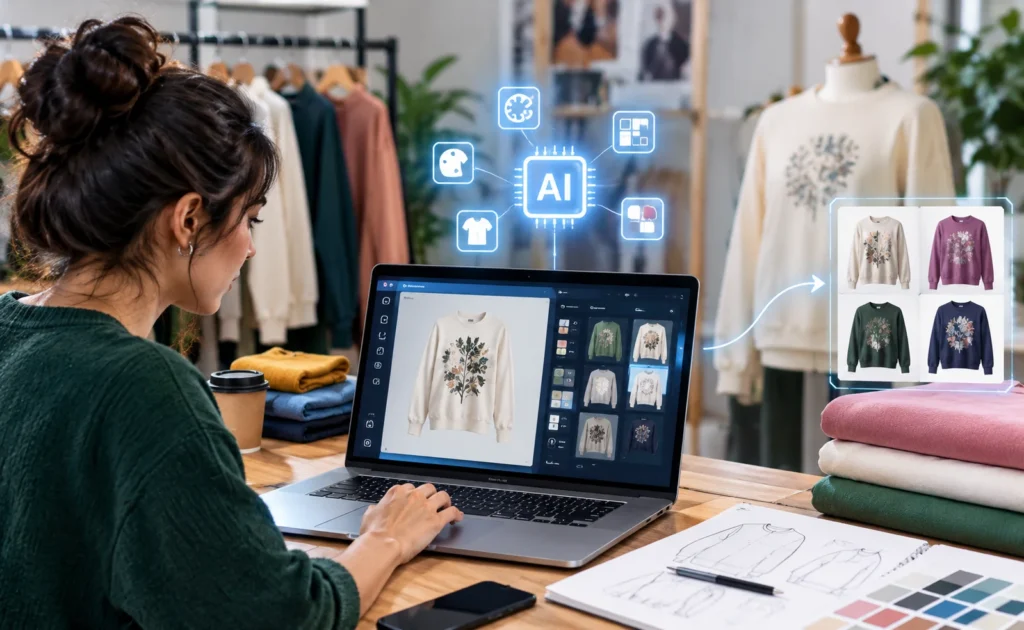
AI-powered fashion platform Demovrs is exploring a new approach to one of the fashion industry’s biggest challenges: unsold clothing. By allowing users to transform existing designs with artificial intelligence and potentially earn royalties when their creations sell, the platform aims to connect consumers, fashion brands and digital creativity.
The global fashion industry produces enormous quantities of clothing every year, but a significant proportion of these garments remain unsold or are discarded. Artificial intelligence is now emerging as a potential tool to help fashion businesses rethink product design, respond to consumer preferences and reduce the gap between production and demand.
According to a newspaper report about Demovrs, the platform is developing a model in which consumers can participate in the fashion design process rather than simply purchasing finished products. Users can modify existing designs with AI, experiment with different styles and potentially receive royalties when their customised designs are sold.
The approach could offer a new way for fashion brands to understand customer preferences while giving consumers a more active role in the products they buy.
What Is Demovrs and How Does Its AI Fashion Model Work?
Traditional fashion businesses generally rely on designers, trend forecasting and market research to determine which products to manufacture. However, predicting consumer demand remains difficult, and a design that appears promising during development may not sell well once it reaches stores.
Demovrs aims to introduce consumers directly into this process through AI-assisted design tools.
Under the model described in the report, users can take an existing fashion design and make changes to elements such as colour, pattern, shape or other visual features. The platform can help turn these preferences into modified product concepts.
Instead of relying exclusively on a brand’s internal design team to determine what customers might like, businesses could use consumer-generated ideas to explore additional styles and identify products with stronger potential demand.
The proposed model also introduces a financial incentive: when a user’s design is selected, manufactured and sold, the creator may receive royalties under the platform’s applicable terms.
This could create a new relationship between fashion brands and their customers, where shoppers have an opportunity to participate in product development and share in the commercial value of successful designs.
Why Unsold Clothing Is a Major Problem for Fashion
Overproduction is a persistent challenge for the global apparel industry. Fashion companies must often make production decisions months before products reach customers, leaving them exposed to changing trends, unpredictable demand and shifting consumer preferences.
A newspaper report citing The New York Times estimates that approximately 30% to 40% of clothing produced globally remains unsold. It also refers to an annual surplus of around 3,000 crore to 4,500 crore garments beyond estimated demand.
These figures are substantial, although the original study, calculation method and precise definition of unsold clothing were not available in the clipping and should be verified before being treated as independently established statistics.
Unsold inventory can create several problems for fashion businesses:
- Financial losses: Products that fail to sell tie up working capital and warehouse space.
- Discounting pressure: Retailers may reduce prices to clear excess stock, affecting profit margins.
- Waste generation: Unsold garments may eventually be discarded, recycled or sent to other resale channels.
- Missed opportunities: Resources spent producing unpopular designs could have been directed towards products customers actually wanted.
AI-assisted design and improved demand forecasting may help companies make more informed decisions. However, these technologies alone cannot guarantee lower overproduction; businesses must also adjust purchasing, manufacturing and inventory-management practices.
How AI Could Help Fashion Brands Understand Customers
AI tools can process design preferences, product information and consumer feedback to help businesses explore potential trends. In a fashion context, these capabilities can support the development of alternative designs and more personalised shopping experiences.
For example, a shopper interested in a particular sweatshirt might want a different colour, graphic, pattern or fit. AI-based design tools could help visualise those changes without requiring the customer to create a design entirely from scratch.
Fashion companies could then assess which designs attract interest and determine whether selected concepts should move into production.
A model that connects customer preferences with manufacturing decisions could offer several advantages:
- More personalised products: Customers may have greater freedom to customise clothing according to their tastes.
- Faster design exploration: AI can help generate or modify visual concepts more quickly.
- Consumer participation: Shoppers can contribute ideas instead of remaining passive buyers.
- Demand insights: Brands may gain useful information about the styles and features customers prefer.
- Potential creator earnings: A royalty system could reward contributors whose designs become commercially successful.
The effectiveness of this approach will depend on how accurately consumer interest predicts actual purchases, as well as how the platform manages production, quality control and creator compensation.
How the Royalty Model Could Benefit Designers and Shoppers
One of the most distinctive elements described in the Demovrs report is the possibility of paying royalties to users whose designs are sold.
In a conventional fashion business, designers usually work within a company’s employment, contract or licensing arrangements. Consumers who suggest a product idea do not typically receive a share of the revenue generated by that idea.
A creator-based model could change this arrangement by giving users a more direct financial incentive to develop appealing designs.
For example, a user might modify a basic T-shirt design by introducing a distinctive graphic or colour combination. If the fashion brand approves the concept, manufactures the garment and sells it, the creator could receive compensation according to the platform’s royalty policy.
However, important details would determine whether such a system works well in practice. These include the royalty rate, how sales are tracked, when payments are made, who owns the final design and what happens when multiple users contribute similar ideas.
The newspaper clipping does not provide the specific royalty percentages or complete terms of Demovrs’ programme, so no fixed earnings should be assumed.
The Environmental Side of Fashion Innovation
The environmental impact of unsold clothing is another reason the industry is exploring new approaches to design and production.
When brands manufacture more garments than consumers purchase, resources such as fabric, water, energy and labour may be used to produce items that never reach their intended customers.
Better demand forecasting and consumer-led product development could help businesses identify promising designs before committing to large manufacturing quantities.
Nevertheless, AI-generated designs will not automatically make fashion more sustainable. If companies use the technology to introduce more products or accelerate the creation of short-lived trends, overall production and waste could still increase.
To deliver meaningful environmental benefits, AI design platforms would need to be combined with responsible production planning, durable materials, efficient inventory management, reuse and recycling initiatives.
The Broader Rise of AI in the Fashion Industry
Fashion is becoming another area where AI is being used to support creative and commercial decisions. Beyond generating designs, AI tools can assist with trend analysis, product recommendations, virtual visualisation, customer service and inventory planning.
For independent designers and smaller fashion businesses, these technologies may lower some barriers to experimenting with new ideas. For established brands, they can provide additional ways to test concepts and gather customer feedback.
Platforms such as Demovrs illustrate a wider shift towards involving customers earlier in the product-development process. Instead of designing products entirely behind the scenes and then attempting to sell them, brands may increasingly explore consumer feedback before deciding what to manufacture.
The long-term success of this approach will depend on the quality of the designs, the reliability of demand signals, intellectual-property protections and the commercial value offered to participating creators.
Challenges Demovrs and Similar Platforms May Face
Despite the potential opportunities, AI-powered fashion marketplaces face several challenges.
Design ownership and copyright: Platforms need clear policies covering original artwork, AI-generated content, existing brand designs and the rights of participating creators.
Product quality: A digital design must be translated into a physical garment that meets expectations for fit, materials, comfort and durability.
Manufacturing costs: Producing a large variety of customised designs can complicate sourcing, quality control and supply-chain operations.
Fair creator compensation: Royalty rules need to be transparent, understandable and consistently applied.
Actual demand: Likes, design submissions and online engagement do not necessarily translate into purchases. Brands must establish whether customer-generated designs can sell at commercially sustainable prices.
Addressing these issues will be essential if the model is to move beyond digital experimentation and become a viable part of the fashion supply chain.
Conclusion: Can AI Help Fashion Become More Consumer-Driven?
Demovrs represents an emerging approach to fashion in which AI-assisted creativity, consumer participation and potential royalty payments come together. By enabling users to modify designs and potentially earn from successful creations, the platform aims to give customers a greater role in determining what fashion brands produce.
The concept also addresses a genuine industry concern: the difficulty of matching clothing production with actual demand. If consumer preferences can be translated into commercially successful products before large production commitments are made, brands may gain better insights into what customers want.
However, reducing unsold inventory and fashion waste will require more than new design tools. Responsible manufacturing, reliable demand forecasting, transparent royalty policies and effective recycling systems will remain important.
As AI continues to influence fashion, platforms that successfully connect creativity with real consumer demand could help reshape how clothing is designed, marketed and sold.
Source note: This article is based on the newspaper clipping supplied by the reader. Demovrs-specific capabilities and royalty arrangements are described as reported claims, not independently verified platform features. The cited global unsold-clothing estimates should be checked against the original source before publication.