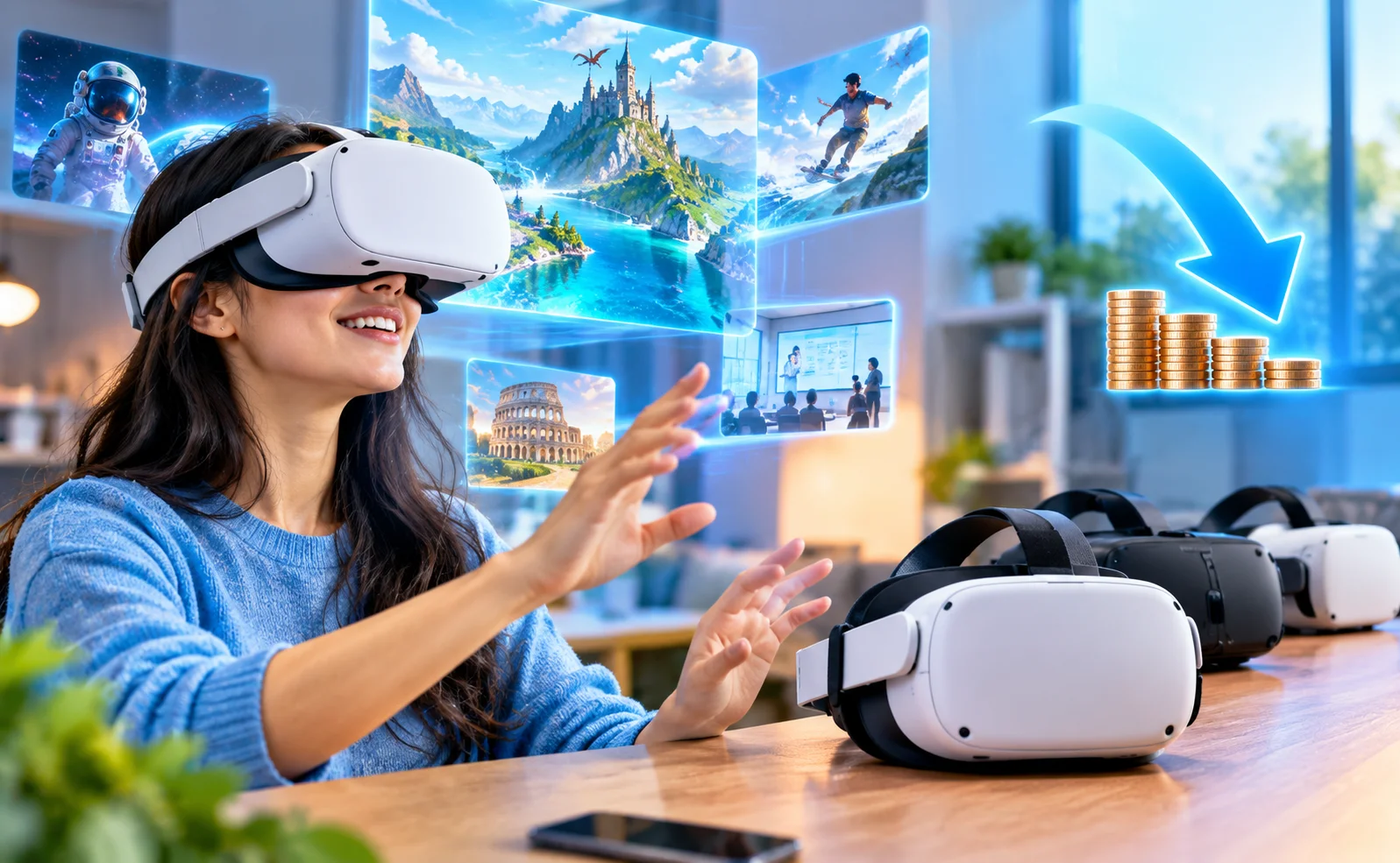
Virtual reality (VR) technology is gradually moving beyond gaming and becoming more accessible to everyday consumers. As hardware prices continue to fall and manufacturers introduce more affordable devices, VR headsets are attracting a wider audience interested in gaming, education, entertainment, virtual travel, fitness, and professional applications.
For years, high prices and expensive computer requirements limited VR to enthusiasts and specialized users. However, recent improvements in hardware design, display technology, processing efficiency, and wireless connectivity are helping manufacturers produce capable headsets at more accessible price points.
This shift could mark an important stage in the evolution of consumer virtual reality.
The Changing Virtual Reality Market
The VR industry has changed significantly over the past few years. Early consumer headsets often required powerful computers, multiple external sensors, complicated setup processes, and substantial investment.
Modern standalone headsets have simplified that experience.
Many newer devices include their own processors, batteries, cameras, motion tracking systems, and displays. Users can put on a headset and enter a virtual environment without necessarily connecting it to a high-end gaming computer.
This has made VR considerably easier for new users to experience.
At the same time, competition between technology companies is encouraging manufacturers to improve performance while keeping prices competitive.
Why Are VR Headsets Becoming More Affordable?
Several technological developments are contributing to the declining cost of VR hardware.
1. More Efficient Hardware
Modern processors can deliver increasingly sophisticated graphics while consuming less power than previous generations. Improved chip manufacturing and component integration also allow manufacturers to build smaller and more efficient devices.
This means companies can offer better performance without increasing hardware costs at the same rate.
2. Standalone VR Devices
One of the biggest changes in the market has been the rise of standalone headsets.
Traditional VR systems often required a gaming PC, cables, external sensors, and additional accessories. Standalone headsets combine many of these components into a single device.
The result is a simpler experience that can appeal to consumers who may not already own expensive gaming hardware.
3. Increased Competition
As more companies enter or expand their presence in the VR market, competition has increased.
Manufacturers are competing on several factors, including:
- Display quality
- Comfort and weight
- Battery life
- Tracking accuracy
- Processing performance
- Software libraries
- Wireless connectivity
- Overall price
Greater competition can give consumers more choices across different price ranges.
VR Is Expanding Beyond Gaming
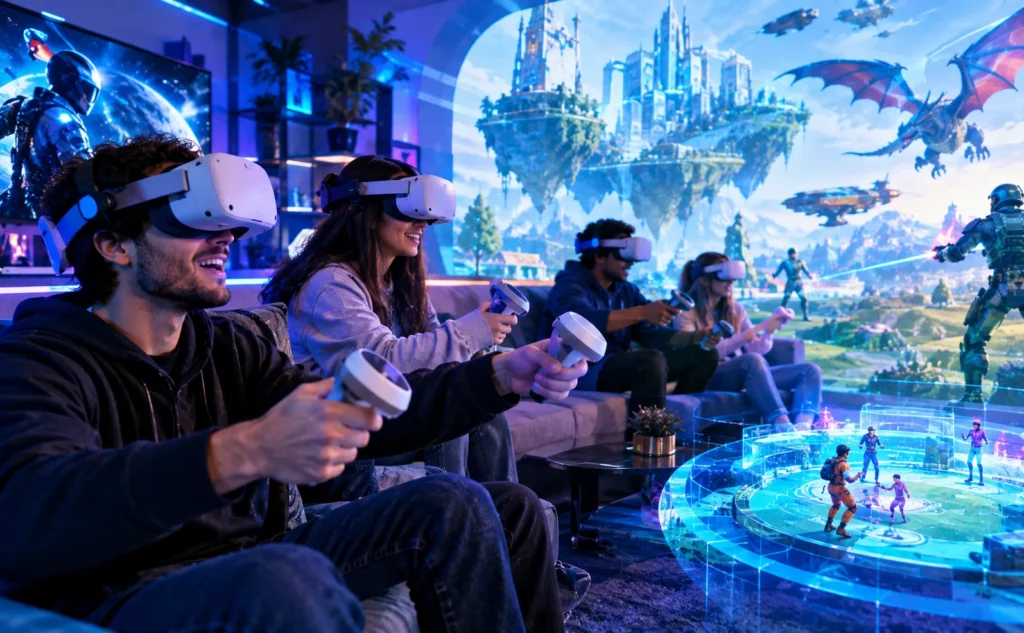
Gaming remains one of the biggest applications for virtual reality, but the technology is increasingly being used in other areas.
Education
Schools and educational organizations can use VR to create immersive learning experiences. Students can explore historical locations, examine scientific concepts, visit virtual museums, or interact with three-dimensional models.
Instead of simply reading about a subject, students can potentially experience it in an interactive environment.
Training and Professional Use
Businesses are also exploring VR for employee training.
Virtual simulations can recreate environments where employees need to practice specific procedures or develop technical skills. This can be particularly useful when real-world training is expensive, difficult to arrange, or carries certain risks.
Virtual Meetings
VR is also being explored as an alternative way to communicate remotely.
Instead of appearing as a small video window on a conventional screen, users can enter shared virtual environments represented by digital avatars. Although this technology is still developing, it could become another option for remote collaboration.
Entertainment and Virtual Travel
Virtual reality can also provide immersive entertainment experiences.
Users can explore virtual destinations, attend digital events, view interactive experiences, and discover environments that may be difficult or expensive to visit physically.
This has opened opportunities for museums, tourism companies, entertainment studios, and content creators.
Lower Prices Could Bring More Users Into VR
Affordability is important because new technologies generally need a broad consumer base before they become mainstream.
When VR headsets become cheaper, consumers who were previously curious but unwilling to spend a large amount of money may become more willing to try them.
A larger user base can also encourage developers to create more applications and experiences. In turn, better software can make the hardware more attractive to additional users.
This creates a potential cycle:
Lower prices → More users → More developers → More applications → Greater interest in VR
If this cycle continues, virtual reality could become a more familiar form of consumer technology rather than a niche product.
Better Displays and Tracking Are Improving the Experience
Affordability is not the only factor driving interest in VR.
Modern headsets are also benefiting from improvements in display resolution, motion tracking, lenses, spatial audio, and mixed-reality capabilities.
Inside-out tracking, for example, allows many headsets to understand the user’s position and surroundings without requiring separate external tracking equipment.
Mixed reality is another important development. Instead of completely replacing the real world with a virtual environment, mixed-reality systems can combine digital objects with the user’s physical surroundings.
This creates new possibilities for gaming, productivity, education, and creative applications.
Challenges Still Remain
Despite the progress, VR technology still faces several challenges.
Comfort remains an important consideration because users may wear a headset for extended periods. Weight distribution, battery capacity, heat management, and lens quality can all affect the overall experience.
Another challenge is content.
A powerful headset is only as useful as the experiences available for it. Developers therefore need to continue creating high-quality applications that provide meaningful reasons for consumers to use VR.
Battery life and long-term hardware costs are also areas where manufacturers continue to compete.
What This Means for the Future of VR
The combination of falling hardware prices, improving technology, and expanding applications could make VR increasingly accessible.
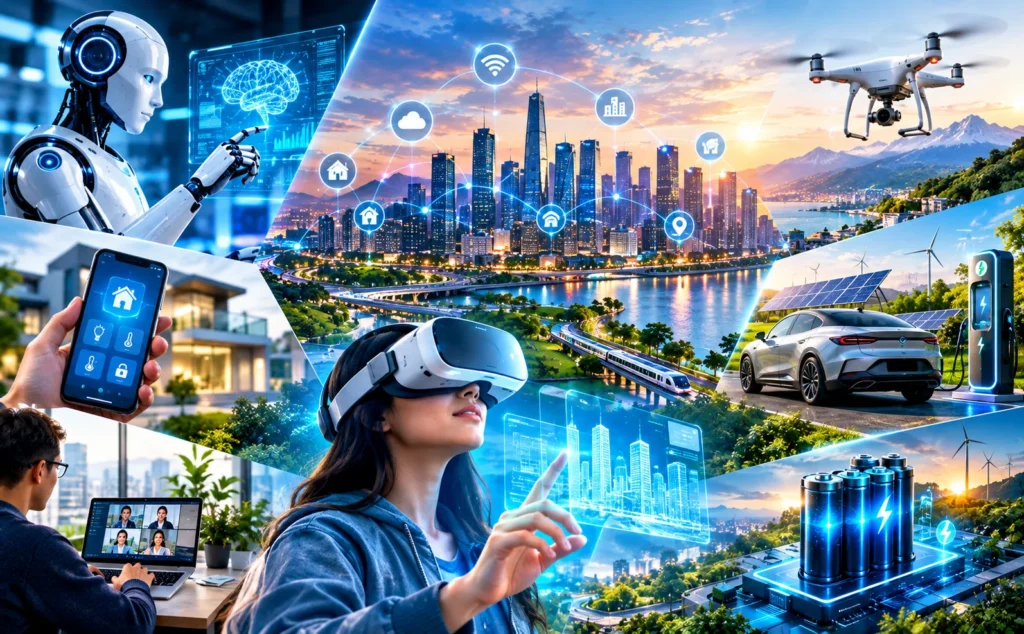
The future of virtual reality may not be limited to gaming. Instead, VR could become part of a broader ecosystem involving education, work, entertainment, healthcare training, design, tourism, communication, and digital experiences.
However, widespread adoption will depend on more than price alone. Headsets will need to become comfortable, easy to use, reliable, and supported by useful software.
Final Thoughts
The decreasing cost of virtual reality headsets represents an important development for the technology industry. As manufacturers improve performance while making devices more accessible, VR is becoming easier for consumers to explore.
Gaming will likely remain a major part of the VR ecosystem, but opportunities in education, professional training, entertainment, communication, and virtual experiences could help expand the market further.
If hardware prices continue to become more accessible while software and user experiences improve, virtual reality could gradually move from a specialized technology toward a more common part of everyday digital life.
AI News Desk will continue to follow developments in virtual reality, artificial intelligence, consumer technology, and other innovations shaping the future of the digital world.