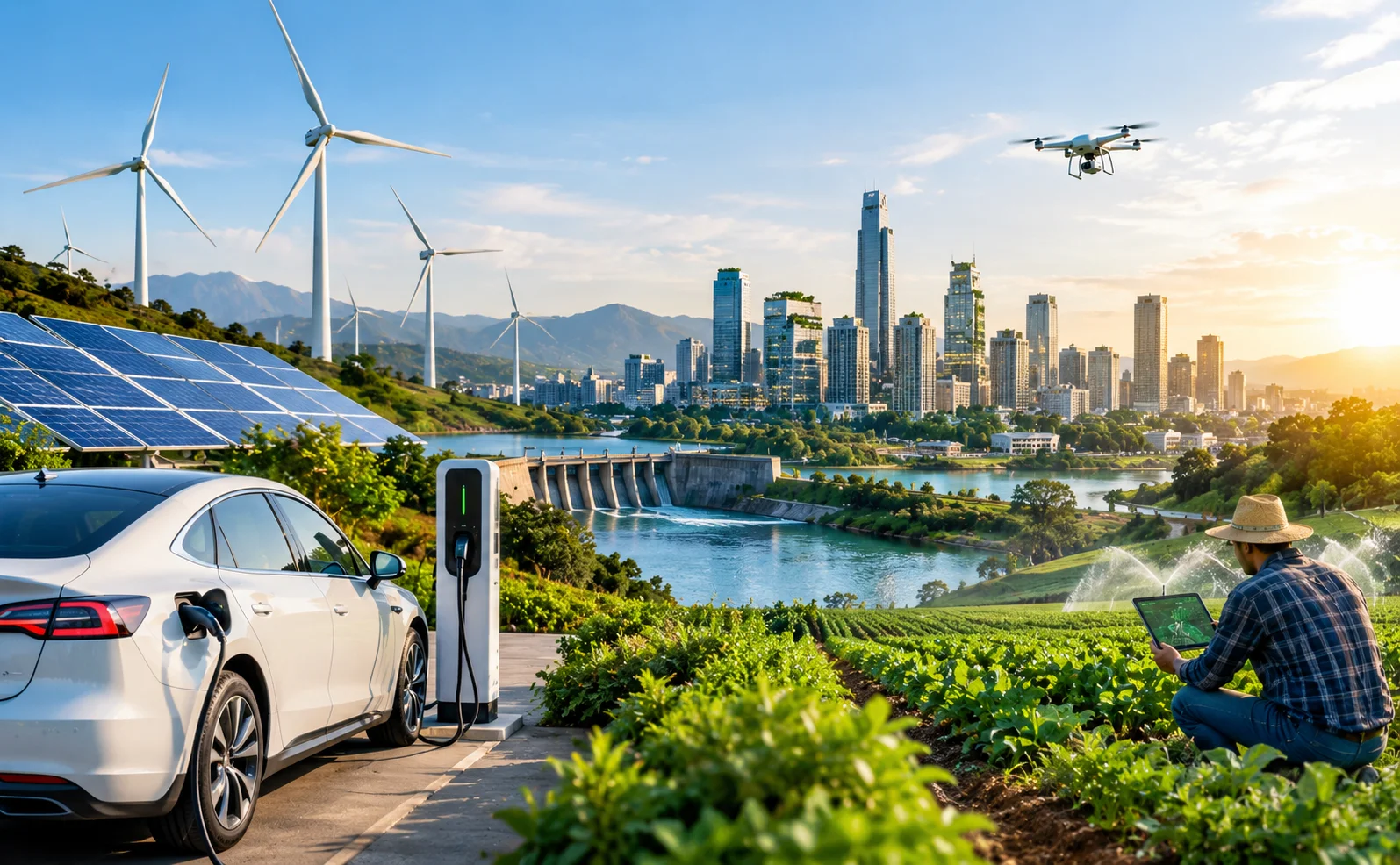
Climate change is no longer a distant environmental concern—it is affecting communities, economies, agriculture, energy systems, and cities across the world. As temperatures rise and extreme weather events become more frequent, countries are increasingly turning toward technology to reduce emissions and build a more sustainable future.
From solar-powered communities and electric transportation to smart cities, green buildings, and innovative energy-storage systems, technology is changing the way people produce and consume energy. Around the world, governments, businesses, researchers, and local communities are exploring practical solutions that can reduce environmental impact while supporting economic growth.
The Growing Role of Green Technology
Green technology refers to technologies designed to reduce pollution, conserve natural resources, improve energy efficiency, and support environmental sustainability. Unlike traditional approaches that often depend heavily on fossil fuels, many green technologies focus on renewable energy, efficient resource use, and lower carbon emissions.
Solar panels, wind turbines, electric vehicles, battery-storage systems, heat pumps, smart electricity grids, and sustainable construction are some of the technologies already being adopted in different parts of the world.
The importance of these technologies is growing because reducing greenhouse-gas emissions requires changes across multiple sectors, including electricity generation, transportation, manufacturing, agriculture, and construction.
Solar Energy Transforming Communities
Solar power has become one of the most visible examples of clean technology. Countries across Europe, Asia, Africa, Australia, and the Americas are expanding solar-energy capacity because sunlight can be converted into electricity without producing direct carbon emissions during operation.
Large solar farms can supply electricity to thousands of homes, while rooftop solar systems allow households and businesses to generate part of their own power. In remote communities, smaller solar installations can also provide electricity where traditional power infrastructure is difficult or expensive to build.
Solar technology is also becoming more flexible. Battery storage allows electricity generated during sunny periods to be saved for later use, helping communities make better use of renewable energy.
Wind Power and the Expansion of Clean Electricity
Wind energy is another major part of the global transition toward cleaner electricity. Modern wind turbines can generate substantial amounts of power, particularly in areas with strong and consistent winds.
Several countries have invested heavily in both onshore and offshore wind projects. Offshore wind farms are especially significant because strong winds over oceans can provide an additional source of renewable electricity without requiring large areas of land.
As wind and solar power become more common, electricity systems are also being redesigned to manage changing levels of renewable generation.
Electric Vehicles Changing Transportation
Transportation is another area where green technology is creating major changes. Electric cars, buses, trains, and two-wheelers are becoming increasingly common in many countries.
Electric vehicles can reduce direct emissions from transportation because they do not burn petrol or diesel while operating. Their overall environmental impact also depends on factors such as how the electricity used to charge them is generated and how their batteries are produced and recycled.
Cities are also experimenting with electric public buses and charging infrastructure. These developments can help reduce dependence on fossil fuels while encouraging cleaner urban transportation.
Smart Cities and Energy-Efficient Infrastructure
Technology is not only changing vehicles and power generation—it is also transforming cities.
Smart-city systems can use sensors, connected devices, data analysis, and automated controls to improve the way energy and resources are used. Smart street lighting, for example, can adjust brightness according to activity levels, while intelligent building-management systems can automatically control heating, cooling, and lighting.
Energy-efficient buildings are another important part of the solution. Modern designs can use better insulation, natural lighting, efficient ventilation, solar power, and energy-saving appliances to reduce electricity consumption.
These improvements can be particularly valuable in rapidly growing cities where demand for electricity and cooling is increasing.
Green Technology in Agriculture
Climate change is also creating challenges for farmers around the world. Changing rainfall patterns, higher temperatures, and extreme weather can affect crop production and water availability.
Technology is helping agriculture become more efficient and adaptable. Precision farming systems can use sensors, satellite imagery, drones, and data analysis to help farmers understand soil conditions and crop health.
Smart irrigation systems can deliver water more precisely instead of relying on traditional methods that may waste large amounts of water. In some regions, renewable-energy-powered irrigation systems are also being explored to reduce dependence on conventional fuel sources.
Cleaner Industrial Technology
Industries are among the largest consumers of energy, making industrial innovation an important part of climate action.
Manufacturers are increasingly exploring energy-efficient machinery, electrification, renewable electricity, recycling systems, and lower-carbon production methods. Some industries are also researching technologies that can capture or reduce carbon emissions from industrial processes.
Green hydrogen is another emerging area. Produced using renewable electricity, green hydrogen could potentially play a role in sectors where direct electrification is difficult, including certain heavy industrial and transportation applications.
However, many of these technologies are still developing, and their environmental and economic benefits depend on how they are produced and deployed.
The Importance of Energy Storage
One challenge associated with renewable energy is that solar and wind generation can vary depending on weather conditions and time of day. Energy-storage technology can help address this issue.
Large battery systems can store electricity when renewable generation is high and release it when demand increases. This can help stabilize electricity networks and make renewable energy more useful.
Researchers are also investigating alternative storage technologies, including different battery chemistries and other forms of long-duration energy storage.
Better storage could become increasingly important as countries add larger amounts of renewable energy to their electricity systems.
Green Technology Beyond Major Cities
Some of the most meaningful applications of clean technology can occur outside major urban centers.
In rural and developing regions, decentralized renewable-energy systems can provide electricity to communities that have limited access to traditional power networks. Solar-powered lighting, clean cooking technologies, water-pumping systems, and small renewable-energy installations can support homes, schools, farms, and local businesses.
These technologies demonstrate that climate solutions are not limited to wealthy countries or large cities. When appropriately designed, clean technology can also support development and improve access to essential services.
Challenges Facing the Green Technology Revolution
Although green technology offers significant opportunities, its expansion also faces challenges.
The production of solar panels, batteries, wind turbines, and other technologies requires raw materials, energy, manufacturing infrastructure, and supply chains. Responsible sourcing and recycling therefore remain important considerations.
Cost is another factor. Some technologies have become much more affordable, but installation and infrastructure expenses can still be significant in certain regions.
Governments also need effective policies, reliable electricity networks, skilled workers, and long-term investment to support the transition. Technology alone cannot solve climate change without changes in infrastructure, consumption patterns, regulations, and public behavior.
International Cooperation Is Essential
Climate change crosses national borders, which makes international cooperation particularly important. Countries can share research, technology, financing, engineering expertise, and practical experience.
International partnerships can also help developing economies gain access to cleaner technologies while building local skills and infrastructure.
The global transition toward clean energy is therefore not simply a competition between countries. It is a long-term effort involving governments, companies, scientists, communities, and individuals.
What the Future Could Look Like
The next stage of green technology is likely to involve greater integration between different systems.
Homes may combine rooftop solar panels, batteries, smart appliances, and electric vehicles. Cities may connect public transportation with intelligent energy networks. Farmers may use real-time environmental data to manage water and crops more efficiently.
Artificial intelligence and advanced data systems may also help optimize electricity grids, predict energy demand, identify inefficiencies, and improve the management of renewable resources.
The goal is not simply to replace one machine with another. The larger objective is to create systems that use less energy and fewer natural resources while maintaining or improving quality of life.
Final Thoughts
Green technology is becoming an increasingly important part of the global response to climate change. From renewable electricity and electric transportation to smart buildings, sustainable agriculture, and advanced energy storage, innovative solutions are emerging across different regions of the world.
There is no single technology capable of solving the climate challenge. Real progress will depend on combining multiple solutions with responsible policies, investment, international cooperation, and changes in the way societies use energy and resources.
As countries continue experimenting with new approaches, the growth of green technology offers an opportunity to build cleaner, more efficient, and more resilient communities for the future.