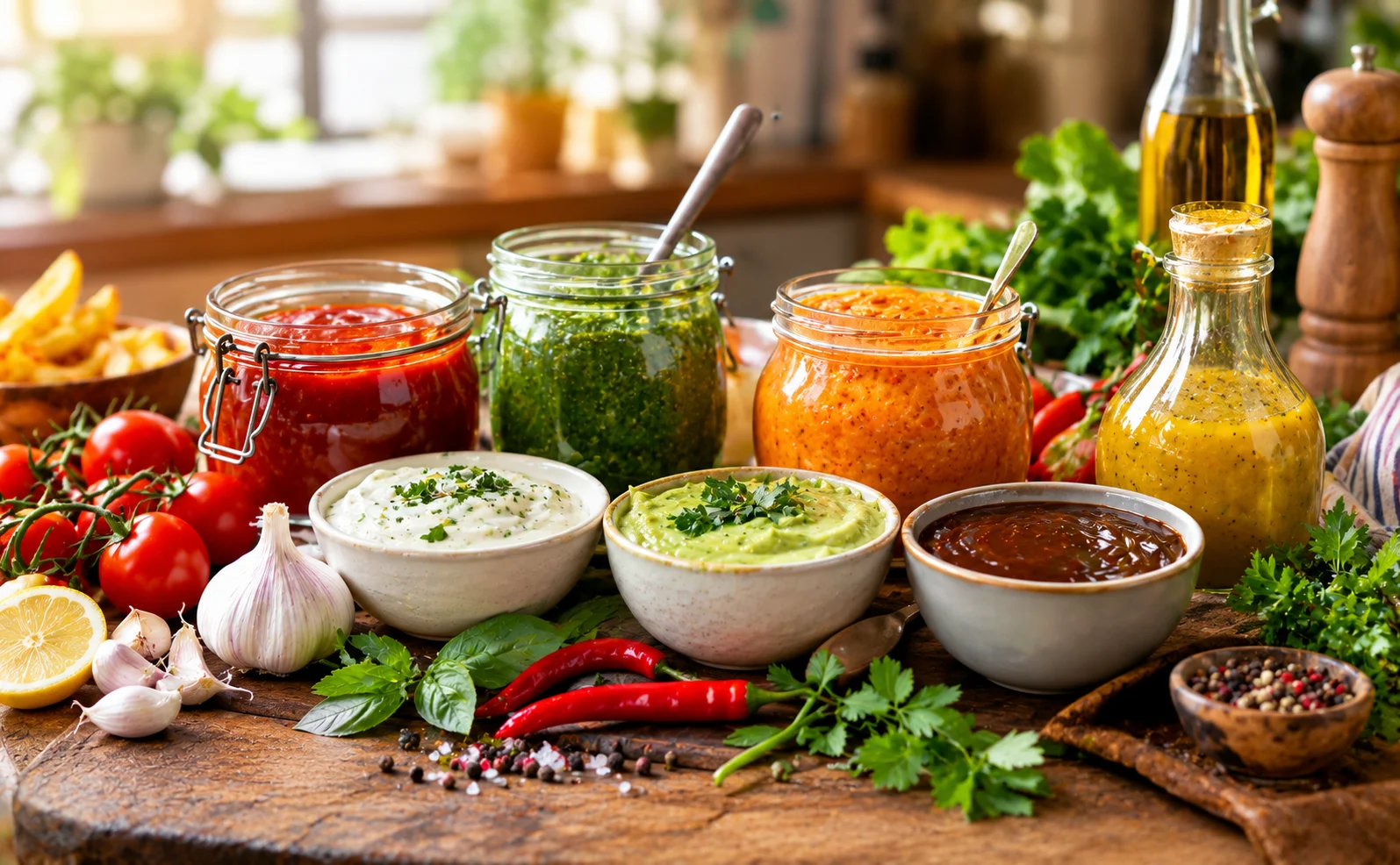
Homemade sauces are having a moment. From creamy dips and spicy chutneys to smoky barbecue sauces and fresh herb-based dressings, people are increasingly experimenting with sauces in their own kitchens.
What was once considered a small finishing touch has become an important part of home cooking. A simple sauce can transform vegetables, sandwiches, grilled foods, pasta, rice dishes, snacks, and even leftovers into something completely different.
The growing interest in homemade sauces is also connected to a broader change in the way people think about food. Many home cooks want more control over ingredients, flavors, freshness, and portion sizes. Making a sauce from scratch can provide all four without requiring complicated cooking techniques.
Why Homemade Sauces Are Suddenly So Popular
There is nothing particularly new about making sauces at home. Cultures around the world have been preparing homemade condiments and sauces for generations.
What has changed is the way these recipes are being discovered and shared.
Social media platforms have made short recipe videos, cooking tutorials, and food experiments incredibly easy to share. A simple sauce recipe can quickly attract attention because it is visually appealing, easy to demonstrate, and adaptable to different meals.
Home cooks are also discovering that a few basic ingredients can create flavors that feel completely different from packaged products.
Better Control Over Ingredients
One of the biggest reasons people choose homemade sauces is control.
When preparing a sauce at home, you decide exactly what goes into it. You can choose the type and amount of oil, salt, sugar, herbs, spices, dairy products, vegetables, or other ingredients.
This can be useful for people who want to adjust recipes according to their personal preferences.
For example, someone may prefer a sauce with less salt, while another person may want extra garlic, more chili, or a stronger citrus flavor.
Instead of searching through supermarket shelves for a product that matches those preferences, home cooks can simply modify the recipe.
Freshness Makes a Difference
Fresh ingredients can give homemade sauces a distinctive flavor.
Fresh herbs, garlic, ginger, tomatoes, lemons, chilies, and other ingredients can provide aromas and flavors that are difficult to replicate exactly with shelf-stable products.
Fresh sauces can also be prepared in small quantities, allowing cooks to make only what they need.
This can be particularly useful for meals where the sauce is intended to provide a bright or fresh finishing flavor.
Customization Is One of the Biggest Advantages
There is no single correct way to make most homemade sauces.
A basic yogurt-based sauce, for example, can become a garlic dip, a spicy dressing, a herb sauce, or a cooling accompaniment simply by changing the ingredients.
The same principle applies to tomato sauces, chili sauces, creamy dips, and vinaigrettes.
Want It Spicier?
Add fresh chilies, chili flakes, hot sauce, or another preferred source of heat.
Prefer a Sweeter Flavor?
A small amount of honey, maple syrup, or another sweet ingredient can change the balance.
Looking for More Freshness?
Lemon juice, lime juice, fresh herbs, or grated vegetables can add brightness.
This flexibility is one reason homemade sauces appeal to creative home cooks.
Homemade Sauces Can Reduce Food Waste
Another interesting advantage is their ability to use ingredients that might otherwise be forgotten in the refrigerator.
Extra herbs can become a green sauce. Overripe tomatoes can be cooked into a tomato-based condiment. Leftover yogurt can become a quick dip. Vegetables can be blended into spreads or sauces.
This approach allows cooks to experiment while making better use of ingredients already available at home.
Instead of following a recipe exactly, people can learn to look at their kitchen and ask what ingredients can be transformed into something useful.
A Simple Sauce Can Transform an Entire Meal
One of the reasons sauces have become so popular is their ability to change familiar foods.
A bowl of roasted vegetables can taste completely different with a garlic-herb sauce. Grilled chicken can be paired with a spicy or smoky sauce. Rice bowls can be finished with a creamy dressing or chili-based condiment.
Even simple foods such as sandwiches, wraps, fries, eggs, or roasted potatoes can become more interesting with the right sauce.
This makes sauces particularly useful for busy households that want variety without preparing an entirely different meal every day.
Social Media Is Driving the Sauce Trend
Food trends often spread rapidly online, and homemade sauces are particularly suited to social media.
Short videos can show the entire process in a few seconds: ingredients are added, blended or mixed, and the finished sauce is poured over a meal.
The visual transformation makes the content easy to understand.
Recipe creators also frequently encourage experimentation, giving viewers a basic formula rather than a rigid recipe.
This has helped turn sauce-making into a creative activity rather than simply a cooking task.
The Rise of Global Flavors
Another reason homemade sauces are attracting attention is the growing interest in international flavors.
Home cooks can now discover sauces and condiments from different culinary traditions through recipes, restaurants, food creators, and cooking communities.
People are experimenting with combinations inspired by Mexican, Indian, Mediterranean, Korean, Japanese, Middle Eastern, Southeast Asian, and other cuisines.
This doesn’t mean every homemade sauce has to follow a traditional recipe. Many cooks are creating their own combinations by mixing familiar ingredients with flavors they’ve recently discovered.
Popular Types of Homemade Sauces
There are countless possibilities, but several broad categories are especially easy to make at home.
Creamy Sauces
Yogurt, mayonnaise, sour cream, tahini, or other creamy ingredients can form the base of quick dips and dressings.
Garlic, herbs, lemon, spices, and chilies can then be added according to taste.
Tomato-Based Sauces
Tomatoes provide a versatile foundation for sauces used with pasta, sandwiches, vegetables, meat, and many other dishes.
Garlic, onions, herbs, chili, and spices can completely change the final flavor.
Herb-Based Sauces
Fresh herbs can be combined with oil, nuts or seeds, garlic, citrus, and seasonings to create bright and aromatic sauces.
These sauces can be particularly useful as toppings for grilled foods and vegetables.
Chili Sauces
For people who enjoy spicy food, homemade chili sauces offer almost unlimited possibilities.
Different chilies can produce different levels of heat and flavor, while ingredients such as garlic, vinegar, fruit, or spices can create additional complexity.
Salad Dressings
A simple combination of oil, acid, seasoning, and optional herbs can create a fresh dressing in minutes.
Once people learn the basic balance between these ingredients, they can create many different dressings without relying on bottled products.
Homemade Does Not Always Mean Complicated
One misconception is that making sauces from scratch requires a lot of time.
Many sauces can actually be prepared in just a few minutes.
A simple yogurt dip may require little more than yogurt, garlic, lemon juice, herbs, and seasoning. A basic vinaigrette can be mixed quickly using oil, vinegar or citrus juice, and seasonings.
Blenders and food processors can make more complex sauces even easier to prepare.
The key is to start with simple combinations rather than trying to recreate complicated restaurant sauces immediately.
How to Build Your Own Sauce
A useful way to experiment is to think about sauces in terms of basic flavor components.
Start with a base such as yogurt, tomato, oil, tahini, avocado, or another ingredient.
Then add acidity, such as lemon juice or vinegar.
Next, introduce aromatics, including garlic, ginger, onion, or fresh herbs.
Add seasoning and heat according to preference.
Finally, taste the sauce and adjust the balance.
If it tastes too rich, acidity may help. If it tastes too sharp, a small amount of sweetness can balance it. If it tastes flat, herbs, spices, salt, or aromatics may improve it.
Learning this basic approach can make sauce-making much more intuitive.
What About Store-Bought Sauces?
Homemade sauces do not necessarily need to replace every packaged product.
Store-bought sauces can be convenient, consistent, and useful when time is limited.
The advantage of homemade sauces is flexibility. They allow people to experiment with ingredients and create flavors specifically suited to a particular meal.
For many households, the practical approach may simply be to use both depending on the situation.
Safe Storage Is Important
Fresh homemade sauces often contain ingredients that can spoil more quickly than commercially packaged products.
Sauces containing dairy, fresh vegetables, herbs, or other perishable ingredients should be handled and stored appropriately.
Clean utensils and containers are important, and homemade sauces should generally be refrigerated when required by their ingredients.
Cooks should also pay attention to how long a particular sauce can safely be stored rather than assuming that all homemade sauces have the same shelf life.
The Future of Home Cooking
The popularity of homemade sauces reflects a larger trend toward flexible, personalized cooking.
People are increasingly interested in preparing food that fits their tastes rather than simply following standardized recipes.
Sauces are ideal for this because they can be changed endlessly without requiring major changes to the main meal.
A single base recipe can become several different sauces simply by adjusting herbs, spices, acidity, sweetness, or heat.
Final Thoughts
Homemade sauces are attracting attention because they combine simplicity, creativity, freshness, and personalization.
They can make ordinary meals more interesting, help use ingredients already available in the kitchen, and give home cooks greater control over flavor.
The trend is also being amplified by social media, where quick sauce recipes are easy to demonstrate and share.
Whether it’s a creamy garlic dip, a fresh herb sauce, a spicy chili blend, or a simple salad dressing, making sauces at home can turn a basic meal into something much more personal.
And perhaps that is the biggest reason homemade sauces are having their moment: sometimes, comfort begins with something as simple as a sauce made exactly the way you like it.